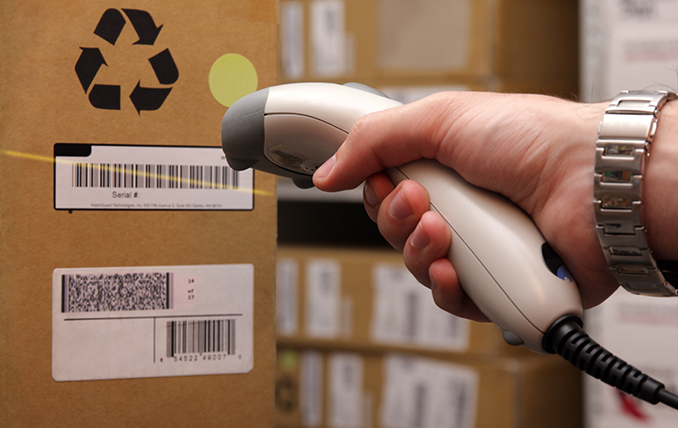
At Kissr, we understand the importance of technology in business. Today, we are going to be discussing barcode scanners, the future, and innovations to watch.
Barcode scanning technology has been a key tool in businesses for decades, enabling efficient product tracking, inventory management, and accurate sales processing. However, as the needs of businesses evolve, so does the technology that supports them. Barcode scanners are now entering a new phase of development, leveraging advanced features such as machine learning, artificial intelligence (AI), and cloud integration to deliver enhanced capabilities. These innovations are transforming the future of barcode scanning, making it more versatile and powerful than ever before.
The Evolution of Barcode Scanners
Traditionally, barcode scanners were used primarily in retail and logistics for basic functions like inventory managementand point-of-sale transactions. However, recent advancements are driving the technology beyond these foundational tasks. Businesses are now able to utilize barcode scanners in ways that contribute to big data analysis, improve supply chain transparency, and offer smarter, more responsive customer service.
Incorporating wireless connectivity, cloud-based data storage, and AI-powered insights, barcode scanners are more than just tools for data entry—they are becoming intelligent devices that provide real-time analytics and operational insights.
Key Trends and Innovations Shaping the Future of Barcode Scanners
- Integration with AI and Machine Learning
One of the most significant trends is the integration of artificial intelligence (AI) and machine learning with barcode scanning systems. By incorporating AI, barcode scanners can recognize patterns in inventory and sales data, predict stock shortages, and suggest reordering times. Machine learning algorithms can help businesses identify trends based on scanning data, allowing them to optimize their inventory management and make data-driven decisions.- Predictive analytics: AI-enabled barcode scanners can analyze historical data to predict future demand, ensuring that businesses are always prepared for fluctuations in inventory needs.
- Enhanced scanning capabilities: AI improves the ability of barcode scanners to read damaged or low-quality barcodes, reducing errors and improving accuracy.
- Cloud Integration for Real-Time Data AccessCloud integration is becoming a crucial component of modern barcode scanning systems. By linking barcode scanners to cloud-based platforms, businesses can access real-time data from any location, enabling greater flexibility and responsiveness. This is particularly useful for businesses with multiple locations or remote teams, as it allows them to monitor inventory and sales activity across all their operations in real-time.
- Real-time inventory management: With cloud-connected barcode scanners, businesses can instantly update their inventory system whenever a product is scanned, ensuring accurate and up-to-date stock levels across all locations.
- Data sharing and collaboration: Cloud integration facilitates easy sharing of data between departments, helping streamline operations and improve decision-making.
- Mobile Barcode ScanningThe rise of mobile barcode scanning is another key innovation. With smartphones now equipped with powerful cameras and processing capabilities, mobile devices can be used as barcode scanners. This trend allows businesses to equip their workforce with mobile scanners that offer the same functionality as traditional handheld scanners but with added mobility and flexibility.
- Cost-effective solutions: Mobile barcode scanning eliminates the need for businesses to invest in expensive hardware, making it a cost-effective solution for small businesses.
- Increased flexibility: Employees can use their mobile devices to scan products in any location, whether in-store, at a warehouse, or during off-site deliveries.
- 2D and 3D Barcode ScanningWhile traditional 1D barcodes have been the industry standard for decades, the future lies in 2D barcodes (such as QR codes) and even 3D barcode scanning technology. 2D barcodes can store more information than their 1D counterparts, making them more versatile for a wide range of applications, including marketing, supply chain management, and product authentication.
- 2D barcodes: These allow businesses to encode more data into smaller spaces, offering enhanced functionality in logistics and product tracking.
- 3D barcodes: Emerging technologies in 3D scanning offer the potential for even more detailed product tracking, especially in complex manufacturing environments where multiple layers of product data are required.
- Sustainability and Eco-Friendly InitiativesAs businesses prioritize sustainability, barcode scanners are evolving to support eco-friendly practices. By using barcode scanning technology to monitor product lifecycles, businesses can track the environmental impact of their products and ensure compliance with sustainability standards. Barcode scanners are also helping companies reduce waste by improving inventory accuracy and minimizing the overproduction of goods.
- Supply chain transparency: Barcode scanners can track products from manufacturing through to sale, allowing businesses to ensure that their products meet sustainability criteria at every stage of the supply chain.
- Wearable Barcode ScannersThe future also holds exciting developments in wearable technology for barcode scanning. Wearable barcode scanners, such as ring scanners or wrist-mounted scanners, allow warehouse workers to perform hands-free scanning, improving efficiency and reducing the time needed to process orders or inventory.
- Hands-free efficiency: Wearable scanners are particularly useful in warehouse settings, where workers can pick, pack, and scan products simultaneously without needing to handle a separate scanning device.
Increased productivity: Wearable barcode scanners streamline operations, allowing employees to work faster and more efficiently.
The Benefits of These Innovations
- Greater Accuracy: Enhanced scanning capabilities and real-time data updates reduce the risk of human error and ensure that inventory data is always accurate.
- Improved Operational Efficiency: Cloud integration and wearable scanners help businesses optimize their operations, reducing downtime and improving the speed at which tasks are completed.
- Data-Driven Insights: With AI and machine learning integrated into barcode scanning systems, businesses can make smarter decisions based on predictive analytics and real-time trends.
Cost Savings: Mobile scanning and cloud-based systems provide businesses with affordable, scalable solutions that don’t require heavy investment in hardware.
Exciting Innovations
The future of barcode scanners is filled with exciting innovations, from AI and machine learning to cloud integration and wearable technology. These advancements will allow businesses to improve efficiency, accuracy, and flexibility in their operations, while also offering real-time insights into inventory and sales data. As barcode scanning technology continues to evolve, businesses that adopt these innovations will be well-positioned to stay ahead of the competition and meet the demands of a rapidly changing marketplace.

